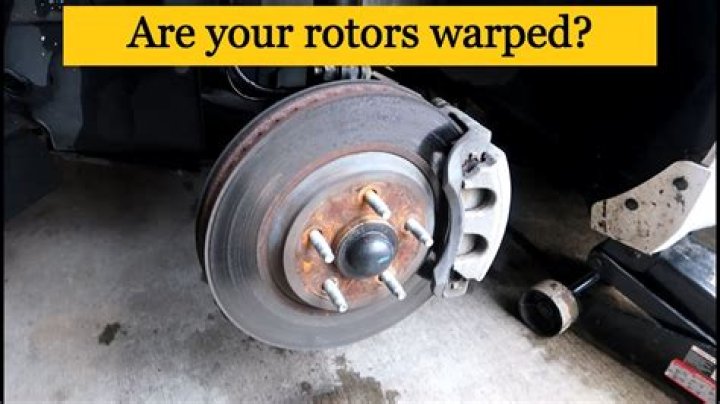
How do you tell if your pads or rotors are bad?
It could represent four signs that it’s time to replace your brake rotors.
- Vibrating Steering Wheel. If you feel pulsing in the brake pedal and vibration in the steering wheel when you slow down, your rotors could be signaling trouble.
- Intermittent Screeching.
- Blue Coloration.
- Excessive Wear Over Time.
How hard is it to replace pads and rotors?
Replacing brake pads and rotors–it’s not as hard as you think. And at some point, the brakes will need to be replaced. Although many will let a mechanic take care of the work, it’s not a terribly difficult process.
Do rotors affect brake pads?
Brake rotors affect the way that your brake pads perform and wear over time. Some vehicle owners that have only replaced the brake pads and had kept the existing rotors experienced uneven wear on their brake pads afterwards, causing the need to replace the pads and rotors prematurely.
Are rotors more important than pads?
Rotors are less complex than pads as they are single pieces of steel. However, there are still differences between different price points. Higher end rotors will offer more precise machining and in some cases different steel content, such as a higher carbon content.
What does a bad rotor sound like?
One of the first symptoms commonly associated with bad brake rotors is noise. If the rotors are warped or severely worn, they may produce squealing or squeaking sounds. Usually warped rotors will produce a squeak, while severely worn rotors will produce a scraping sound.
How much does it cost to replace rotors and pads?
Labor at a shop to replace rotors and pads is approximately $150 to $200 per axle. Brake rotor and pad repair generally comes out to around $250 to $500 per axle when visiting a professional shop.
What happens if you change brake pads but not rotors?
Brake rotors do not become so heated that the brake rotor material warps. He explains that brake rotors become uneven due to pad material being transferred to the rotor, and not the rotor itself warping. This means the tires wobble and vibrate, leading to a jerky steering column and to anti-lock brake system failure.
Can I just replace brake pads and not rotors?
A: Unless the rotors are worn beyond the mandatory discard thickness, we prefer to replace the pads only. Not only does this obviously save money, but time. New pads must be burnished into new rotors before the best braking performance is achieved.
Why are my brake pads and rotors getting super hot?
When you drive heat is generated in the caliper which causes the brake fluid to expand. Normally this expansion is accepted into the master, but if it is over filled there is nowhere for it to go so it pushes the calipers piston out which creates excessive friction between the brake pads and rotors.
What causes glazing on rotors on car brakes?
Glazed brake pads: The brakes have been heated up to the point that they become hardened and are no longer create enough friction on the brake drum or rotor. This condition can cause the Performance Brake Pads to make all kinds of noises, from squeaking to grinding.
How can you tell if your brake pads are glazed?
Examine the brake pads visually. You can tell if the pads are glazed if you can run your finger over the surface and it’s smooth. A shiny or crystallized look to the brake pad is also an indication that it has glazed over.
When you drive heat is generated in the caliper which causes the brake fluid to expand. Normally this expansion is accepted into the master, but if it is over filled there is nowhere for it to go so it pushes the calipers piston out which creates excessive friction between the brake pads and rotors.
Glazed brake pads: The brakes have been heated up to the point that they become hardened and are no longer create enough friction on the brake drum or rotor. This condition can cause the Performance Brake Pads to make all kinds of noises, from squeaking to grinding.
Examine the brake pads visually. You can tell if the pads are glazed if you can run your finger over the surface and it’s smooth. A shiny or crystallized look to the brake pad is also an indication that it has glazed over.
